Peter Testory Named New NACUFS Board Chairperson
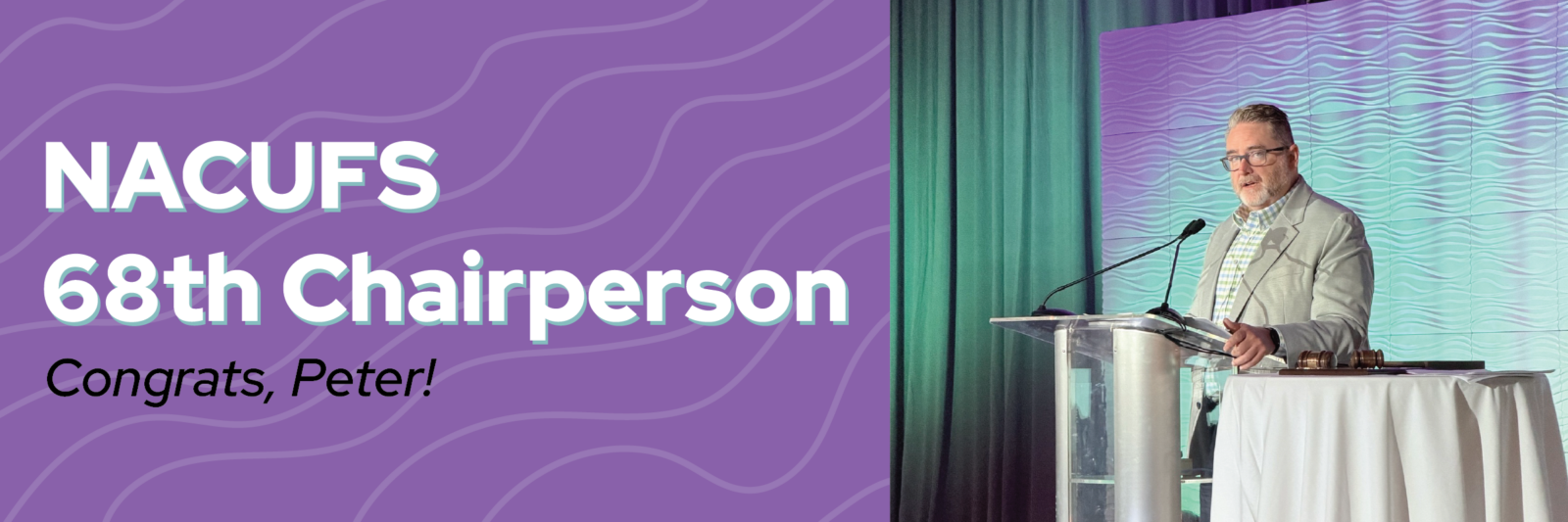
Peter Testory, Director of Dining and Culinary Services (DCS) in University Housing, was installed as the National Association of College & University Food Services’ (NACUFS) 68th chairperson during the association’s annual General Membership Assembly at the 2026 National Conference in New Orleans, Louisiana.
NACUFS is the largest foodservice association for colleges and universities, providing education, professional development, networking, benchmarking, and opportunities for institutions to learn from one another.
Testory is no stranger to leadership. He has served as Director of DCS for the past nine years, as an at-large member of the NACUFS Board of Trustees for four years, and chair-elect for the past year. He now steps into the role of chair, where he will lead and help shape the association’s work to elevate collegiate dining and advance strategic priorities in the coming academic year while continuing to lead Housing’s dining program at UW–Madison.
“[This honor] is incredibly meaningful to me,” Testory said, “I have spent much of my career in collegiate dining, and NACUFS has played an important role in my professional development throughout that time. To now have the opportunity to serve as Chair and give back to an organization and an industry that has given so much to me is something I am very proud of.
“I also view this as recognition of more than one individual,” he added, “I would not have this opportunity without the incredible teams I have had the privilege of working with, particularly the team here at UW–Madison.”
Working at UW–Madison has reinforced Testory’s belief that leadership is ultimately about people.
“My responsibility as a leader is to create an environment where people feel empowered to contribute, take ownership, try new things, and grow as leaders themselves.”
During his tenure as chair, Testory hopes to continue strengthening the value NACUFS provides to its members while making sure they are looking ahead at what collegiate dining will need in the future. Workforce challenges, technology, changing student expectations, financial pressures, increasing complex regulatory environments, and the role food plays in student well-being are all areas the profession is navigating.
He hopes they can also continue creating opportunities for members to learn from one another and recognize that some of the best solutions already exist within member institutions. As chair, Testory looks forward to sharing how the UW dining program embraces experimentation, evaluates its impact, and isn’t afraid to adapt with colleagues across the country.
“One of the things I am most proud of at UW–Madison is our willingness to try new things while remaining focused on what our students are telling us they need,” Testory said, “We have explored technology and innovation in a number of ways, from autonomous food delivery to new retail technologies and concepts. But innovation doesn’t always have to mean technology. Some of our most meaningful changes have come directly from listening to student feedback and challenging ourselves to rethink how we operate.”
The willingness to rethink how they operate is especially important given the complexity of a collegiate dining program.
At UW–Madison, dining is running restaurants, retail operations, catering, production kitchens, purchasing and supply chains, food safety programs, nutrition and allergen programs, technology systems, facilities, and significant workforces, all while responding to the changing needs of thousands of students every day. But what people may not realize is the role the employees play in creating community. The dining team interacts with students every single day, and those interactions can have an impact well beyond the meal being served.
This impact they have on students is what keeps Testory passionate about his work.
“Sometimes we are providing a meal, and other times we are providing a familiar face, a place where someone feels comfortable, their first job, or an opportunity to connect with other people. Knowing that our work contributes to a student’s overall experience at UW is what continues to make this work meaningful to me.”